

Storm Roof Damage Repair in Clermont, FL
Clermont rides some of the highest ground in peninsular Florida — a run of rolling hills and ridgelines that lifts the hilltop subdivisions well above the flat country around them, and that elevation is exactly why a storm reaches these roofs when it leaves the streets downhill alone. Wind speeds up as it climbs and crosses open high ground, so a gust that merely rustles the flatland near Mascotte arrives on a Clermont ridgetop with enough force to catch a shingle tab and peel the course behind it, pry a length of flashing off a valley, and open the windward pitch straight to the weather. The Orlando-corridor storm track runs right over South Lake County, which means even an ordinary summer thunderstorm — never mind a named system like Irma or Ian — can throw a straight-line gust across these ridges hard enough to strip the covering off one hilltop home while the sheltered neighborhood a quarter-mile below barely loses a leaf.
Start your restoration
We’re on it.
A Paul Davis dispatcher will call you within minutes. Keep your phone nearby.
Need to talk now? Call us directly
Certified Roof Storm Damage for Clermont and Lake County Homeowners
Serving Clermont and all of Lake County, FL.
The roof is also the part of a Clermont home that punishes you for waiting, and the high ground sharpens that timing. A storm rarely tears the whole roof off — it finds one weak line and works it: a shingle edge it can lift on the windward slope, the flashing around a chimney or a vent, a soft spot where a wind-thrown limb drives through the decking. From the driveway the roof can look nearly whole while the rain right behind the gust pours in through the breach, runs the rafters, and soaks the insulation, the ceilings, and the wall cavities below before the sky even clears. Up here the rain is almost always a few minutes behind the wind, so the gap between a lifted course and a soaked ceiling is short — which is why what looks like a few missing shingles from the street is rarely just that.
Paul Davis treats the damage above and the leak below as a single event, so you make one call. We surge crews from our Belleview base, tarp the breach first to stop the intrusion cold, then dry out the water that already pushed in, clear any debris off the structure, and rebuild the roof the storm tore open — one crew from the emergency tarp to the last course of shingles. Because we are a licensed Florida general contractor, the crew that straps a tarp over your ridge at dusk is the same one that reseals the flashing, replaces the decking, and finishes the ceiling below. This work runs alongside everything we handle across the broader storm damage restoration in Clermont response, and roof damage rarely arrives on a polite schedule — usually late in the day or overnight when crews are hardest to reach — so we keep ours surged and roll trucks within the hour.
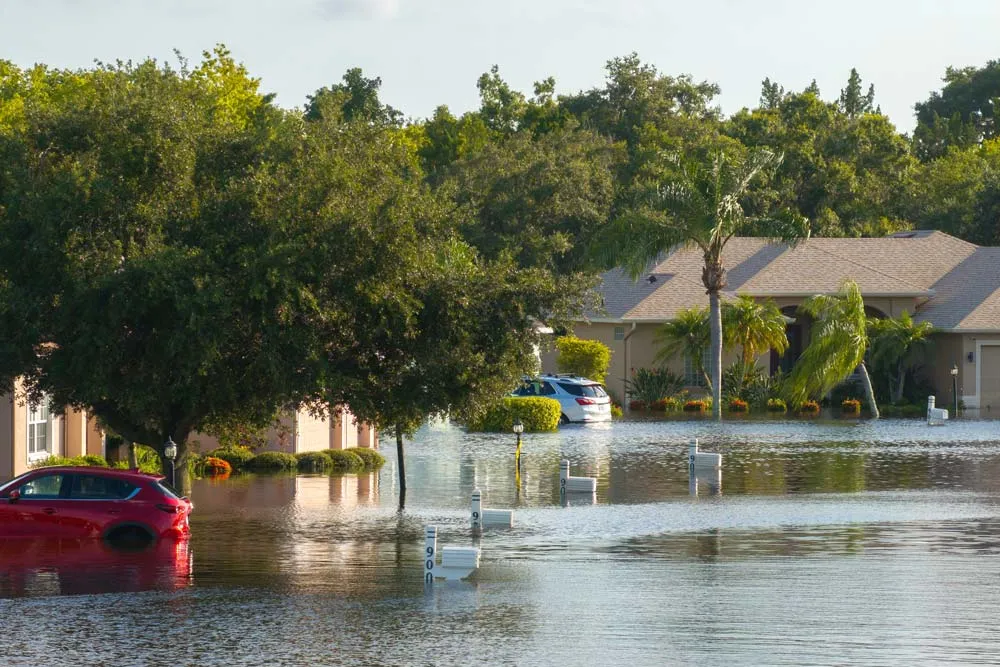
Why Clermont homeowners call Paul Davis for storm roof damage repair
When a storm peels back your shingles on the ridge, tears your flashing, or drops a limb through the deck, you need one team that can tarp the breach tonight and still be the team that rebuilds the roof. Paul Davis runs the entire job — tarp, drying, debris, and reconstruction — from a Belleview base close enough to Clermont to move the moment the storms pass.
- Certified restoration technicians on every job — not general laborers
- 60-minute emergency dispatch, 24/7/365
- Direct insurance billing with most major Florida carriers
- Thermal imaging and moisture mapping on every inspection
- Guaranteed workmanship
They came and did the work and were gone. Very professional, know what they are doing, and cleanup like they were never here. They had it done in a week. I would highly recommend Paul Davis Restoration to anyone.
What puts Clermont homes at risk
Every restoration job starts with understanding the local conditions that made it worse. These are the factors our crews see repeatedly across Clermont properties.
Exposed ridgelines catching the wind on the high ground
Clermont's hilltop subdivisions sit on some of the highest ground on the peninsula, and wind accelerates as it crosses that open high ground — so a gust that does nothing in the flatland lifts shingles and pries flashing loose up here. We start the first tarp on the windward slope where the storm actually opened the roof, before the rain band still moving through pours more water into the attic. How fast that breach gets closed is the single biggest factor in how much interior damage a homeowner ends up facing.
Uniform mid-2000s roofs across the ridge subdivisions
So many Clermont subdivisions went up at once in the building boom that one gust front can lift the same builder-grade shingles down a whole street of near-identical homes on the same exposed ridge. On those roofs the flashing and the covering tend to give the same way house to house. We scope the entire roof the storm worked — not just the bare patch showing from the curb — and reseal and rebuild it under one Florida-licensed general contractor so nothing is left half-secured.
Wind-thrown limbs punching through the decking
A straight-line gust across a Clermont ridge throws limbs from the oaks and pines that shade the hilltop yards, and a single heavy branch is enough to punch through the shingles and crack the decking underneath. We get the limb off the roof safely before its weight shifts and tears the hole wider, then tarp the puncture and rebuild the deck and framing it broke — because a limb strike that looks like surface damage from the yard usually hides a roof open straight to the sky.
Wind-driven rain finding the breach behind the gust
Up on the high ground the rain is rarely far behind the wind, and a roof that has just lost a few shingles is wide open when it arrives. That sideways rain drives straight through the opening and runs down the rafters into the insulation and drywall while the covering still looks mostly intact from the driveway. We tarp the breach fast so the band still passing over the ridge cannot keep pouring water into the home, then map and dry whatever already got in with thermal imaging.
What to expect, step by step
Certified restoration technicians on every job, direct insurance billing, and daily updates from first assessment through final walkthrough.
Secure the roof
We arrive first to stop the bleeding — emergency roof tarping over every breach and board-up over any opening, so no more wind-driven rain gets in while the repair is planned. On exposed homes up on the ridge this comes first, because every hour an opening stays uncovered adds interior damage.
Assess the full scope
Once the roof is sealed, we walk the whole structure with thermal imaging and moisture mapping to find the water that pushed through the breach into the attic, ceilings, and walls — not just the damage visible from the yard.
Extract and dry the water intrusion
Where rain followed the breach inside, we extract it and dry the structure with industrial equipment per IICRC standards until it reads dry, not just looks dry — before the moisture reaches the mold stage.
Remove downed limbs and debris
We clear fallen limbs and storm debris safely off the roof and framing before their weight shifts further, then haul it out so the rebuild starts on a clean, stable deck.
Repair and rebuild the roof
As a licensed Florida general contractor, we rebuild the decking, flashing, covering, and any interiors the leak damaged — returning your Clermont roof and home to pre-loss condition under one accountable scope.
Document and close the claim
From the first tarp to the final walkthrough, we photograph and log every step and bill your carrier directly, so the claim closes cleanly and the work carries our guarantee.
In Depth — Clermont
Storm Roof Damage Repair in Clermont: What You Need to Know
Lifted and missing shingles
Gusts catch a shingle tab and peel the course behind it, opening the roof deck to wind-driven rain.
This is the most common loss we see on the high ground — a thunderstorm gust front lifting the builder-grade shingles off a Clermont ridge home well short of a named storm. We tarp the exposed deck immediately so the rain right behind the wind stays out, then replace the course and repair any decking that loosened, all under one Florida-licensed general contractor.
Failed flashing and valley leaks
Wind pries flashing loose around chimneys, valleys, and vents, opening a hidden leak path that drips long after the storm.
On Clermont's uniform mid-2000s roofs the flashing tends to go first, and the leak hides above the ceiling until a brown ring spreads across the drywall. We find the entry point, map the moisture that tracked in with thermal imaging, dry the framing, and reseal the roof before South Lake County's humidity starts mold in the attic.
Tree-limb punctures through the deck
Falling oak and pine limbs drive through the shingles and crack the decking, leaving the structure open straight to the weather.
A straight-line gust across a Clermont ridge throws heavy limbs onto the rooflines below, and one branch is enough to crack the deck wide open. We remove the limb safely off the structure before its weight shifts and widens the hole, seal the puncture, and then rebuild the deck and covering it broke through.
Mold and Your Health
A storm-damaged roof looks like a dry problem, but the real health risk shows up when rain pours through the breach it just opened on the ridge. Water that drives in through lifted shingles or torn flashing is not clean — it picks up contaminants on the way and soaks into insulation and ceiling cavities, where it can turn to mold within a couple of days in Clermont's humidity, often before any visible sign appears. When a hurricane drives ground-level flooding into the home as well, that intrusion is treated as Category 3 — a biohazard that needs proper extraction, not a wet-vac and a fan. That is why we tarp every breach immediately to stop further intrusion, then map and dry the structure to standard before we rebuild, protecting your family's air as much as the house.
Certification & Insurance
Paul Davis is a licensed Florida general contractor, which is why we can do more than tarp a storm-damaged roof — we rebuild the decking, flashing, covering, and the interiors the leak reached under one accountable scope. Our restoration technicians are certified to IICRC standards, the documentation and drying benchmark South Lake County adjusters and Florida carriers recognize, and our crews are EPA Lead-Safe certified for any older structures alongside Clermont's newer ridge subdivisions.
What to tell us when you call
Four things that speed up your claim
Type of damage — general location in the home — whether the source is still active — whether the building is safe to enter. We handle everything else.
Commercial Property Restoration
Storms open commercial roofs in Clermont as readily as the hilltop homes — the retail along the US-27 corridor, the offices and medical suites near downtown, and the warehouses out toward Groveland where a hard gust peels back a section of membrane and lets rain onto the floor. Paul Davis secures commercial buildings fast with large-scale tarping and board-up, then runs any needed drying, debris removal, and full roof reconstruction on a timeline built around getting you back open, coordinating directly with property managers and commercial adjusters so the repair does not stall.
When a storm opens up a roof anywhere in Lake County, Paul Davis is the single team that secures, dries, and rebuilds it.
Why a breached roof on the Clermont ridges turns into a soaked ceiling so fast
A storm rarely tears the whole roof off a Clermont home. It opens one weak line — a peeled course of shingles on the windward slope, a length of flashing pried off a valley, a hole where a wind-thrown limb came through — and that small breach is the entire problem. Because the hilltop subdivisions sit up on open high ground right under the Orlando-corridor storm track, the wind reaches the roof with a running start and the rain right behind it keeps coming, driving through the opening, running the rafters, and soaking the insulation and drywall below while the roof still looks nearly whole from the yard. That is why we never just patch and walk away. We seal the breach, find the water that already pushed in with thermal imaging, dry the structure to standard, and then rebuild — the same disciplined sequence we bring to all of our storm damage work, focused here on the roof, where most Clermont storm losses begin.
Working with your Florida carrier on a storm roof claim
When a line of storms rolls over South Lake County, adjusters are working a stack of roof claims at once, and the homes scoped fastest are the ones with clean documentation from the first tarp. We photograph the lifted shingles, the torn flashing, the limb and the puncture, and we log moisture readings as we dry whatever got wet inside. We bill directly with most major Florida carriers — including Citizens — so you are not floating the cost or chasing paperwork while there is a tarp strapped over the bedroom on the ridge. When the leak has soaked deep into ceilings and walls, we tie the work into our water damage restoration in Clermont protocols so the drying meets the standard your adjuster needs before the roof rebuild is approved.
Disaster doesn’t wait.
Neither do we.
Roof damage tends to hit late in the day or overnight, and that is exactly when we move. Our crews surge from the Belleview base the moment a line of storms clears South Lake County, rolling roof-tarp and board-up trucks to Clermont around the clock so a breached deck up on the ridge is sealed before the next rain band gets in. Call any hour during or after it passes — we dispatch within 60 minutes, 24/7/365.
Florida Emergency Hotline — 24 hours a day
Request a Free Estimate →Local department contacts
After major damage in Clermont, you may need to reach a local department — the building office for permits and structural inspections, the health department for mold or contamination questions, or fire-rescue for a fire-damage assessment. Here are the offices serving Clermont. Paul Davis is always one call away and can help you navigate the process.
Building Department
City of Clermont Building Services
685 W Montrose St, Clermont, FL 34711
(352) 241-7315Health Department
Florida Dept of Health — Lake County
2113 Griffin Rd, Leesburg, FL 34748
(352) 589-6424Contact information is accurate to the best of our knowledge at time of publication. Paul Davis Restoration is not responsible for changes to agency contact information, hours, or services. For the most current information please contact the agency directly.
Frequently asked questions
Absolutely, and the elevation is why. Clermont's hills and ridgelines are some of the highest ground in peninsular Florida, and wind accelerates as it crosses that open high ground. A summer thunderstorm throws a gust front out ahead of the rain, and on an exposed hilltop that straight-line wind is plenty to lift shingles and pry flashing loose — no named storm required, while the sheltered streets below barely notice.
Because wind speeds up as it climbs and crosses open high ground, and Clermont's hilltop subdivisions sit right in its path under the Orlando-corridor storm track. The same gust that merely rattles the flatland a quarter-mile below reaches your roof with a running start — enough to peel the windward course of shingles. A microburst can also strike one ridge and leave the next street untouched, which is why we assess the full footprint of a roof loss, not just the curb view.
Yes, because up on the Clermont ridges the rain is rarely far behind the gust. A few lifted shingles leave the roof deck exposed, and the downpour that follows drives straight into the attic and the ceilings below. We seal the breach fast so a small loss does not become a soaked ceiling overnight, then replace the covering and repair the decking underneath.
We dispatch within 60 minutes, 24/7/365, and our Belleview base keeps us close to Clermont and the surrounding South Lake County communities like Minneola, Groveland, and Mascotte. When a line of storms is moving through we surge crews and run tarp trucks around the clock, because roof damage usually happens late in the day or overnight when the roads are still slick and covered in branches. You can see the neighborhoods we cover on our <a href="/service-areas/clermont">Clermont service area page</a>.
Both, and that is the point of a full service. The breach is only half the loss — the rain that came through soaks ceilings, insulation, and walls. As a licensed Florida general contractor, we seal the opening, dry out everything the leak reached, clear the debris, and rebuild the roof and the interiors it damaged under one scope.
Storm roof damage in Clermont?
When a storm lifts your shingles on the ridge, tears your flashing, or drops a limb through the deck, you need one team to tarp the breach and rebuild the roof. Paul Davis runs the entire repair from a Belleview base, close to Clermont and ready the moment the storms pass. Call now and we will dispatch a certified crew within the hour.