
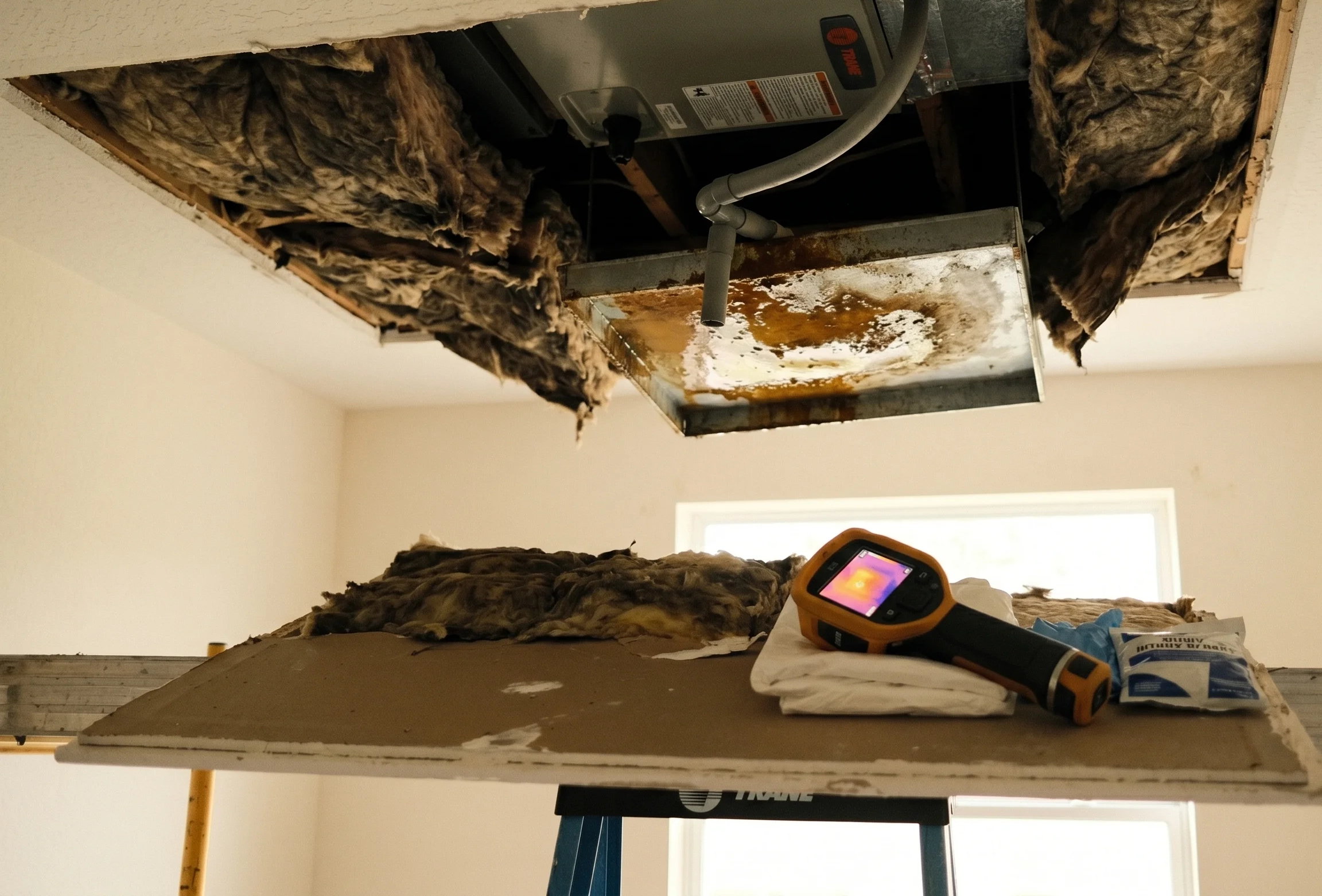
AC / HVAC Leak Water Damage
AC and HVAC leak damage restoration in Marion, Sumter & Lake Counties, FL. Paul Davis addresses condensate line leaks, air handler overflow, and hidden moisture from HVAC systems.
HVAC Leak Damage in our primary service areas
Select a hub city to see local risk factors, the restoration process, and response times. Additional communities coming soon.
AC/HVAC Leak Restoration — Source Identification, Hidden Moisture Mapping
AC and HVAC leak damage is one of the most common water damage sources in Marion, Sumter, and Lake County homes — Florida's year-round air conditioning operation means condensate systems run continuously, and a blocked condensate drain line or failed drain pan can release significant water before the homeowner is aware. Because air handlers and condensate pans are typically located in closets, attics, or utility rooms, HVAC leak water damage often saturates surrounding structural materials — drywall, subfloor, and framing — before it becomes visible in living areas. Paul Davis AC/HVAC leak damage restoration begins with source identification and shutoff, followed by moisture mapping to identify all affected materials, water extraction, structural drying, and complete documentation for insurance.
HVAC leak water damage in Florida presents an elevated mold risk because the warm, humid climate accelerates mold colonization in wet structural materials — particularly in the dark, enclosed spaces near air handler installations. The combination of persistent moisture from a slow condensate leak, Florida's baseline ambient humidity, and the warmth of an active air handler creates conditions for rapid mold growth in wall cavities and subfloor assemblies adjacent to the unit. Paul Davis AC/HVAC leak restoration identifies whether mold colonization has begun alongside the water damage, and addresses both conditions in the restoration scope.
Why homeowners choose Paul Davis
- HVAC source identified and shut off before extraction begins
- Hidden moisture mapping — HVAC leaks saturate materials before visible damage appears
- Mold risk assessment in wet closets and attic air handler spaces
- Structural drying of all adjacent assemblies
- Direct insurance billing where HVAC leak damage is a covered event
How HVAC Leak Damage works, step by step
Certified restoration technicians on every job, direct insurance billing, and daily updates from first assessment through final walkthrough.
Source Identification & Shutoff
Identify the specific HVAC leak source — condensate drain blockage, drain pan failure, or supply line — and confirm it has been shut off or repaired before extraction proceeds.
Moisture Mapping
Moisture readings in all structural assemblies adjacent to the air handler, condensate line path, and all areas where water may have traveled — including hidden assemblies in closets, under flooring, and in walls.
Water Extraction
Extract all standing water and saturated materials from the affected area — including pulling back flooring and accessing wall cavities where moisture readings indicate saturation.
Mold Risk Assessment
Where HVAC leak conditions existed for extended time before discovery, assess for mold colonization in the affected assemblies — particularly in dark, warm enclosed spaces near air handlers.
Structural Drying
Industrial air movers and dehumidifiers deployed in all affected areas. Daily moisture readings track structural drying until all assemblies reach acceptable moisture content.
Documentation & Reconstruction
Complete documentation of all HVAC leak damage for insurance. Reconstruction of all removed materials after drying is confirmed — drywall, flooring, and finishes.
Frequently asked questions
Air conditioning systems produce several gallons of condensate per day in Florida's humid climate. A blocked condensate drain line causes the drain pan to overflow — releasing that water into the adjacent structural materials. A slow-draining line may overflow repeatedly over days before the pan floods enough to be visible.
Yes — HVAC leaks in Florida's climate create warm, persistently wet conditions in enclosed spaces that are ideal for mold growth. Paul Davis assesses for mold colonization as part of every HVAC leak restoration where the leak duration is uncertain.
Coverage depends on whether the leak was sudden and accidental versus gradual and maintenance-related. Paul Davis documents the extent and nature of the leak damage to support the insurance coverage assessment.
Paul Davis identifies and documents the HVAC source. Repair of the condensate system or air handler is coordinated with a licensed HVAC contractor as part of the restoration process — the source is confirmed repaired before reconstruction materials are installed.
Part of our
Water Damage Restoration →AC or HVAC Leak Damage? Call Paul Davis.
Paul Davis provides complete AC/HVAC leak damage restoration in Marion, Sumter, and Lake Counties — source identification, moisture mapping, structural drying, and full reconstruction. Call now.