
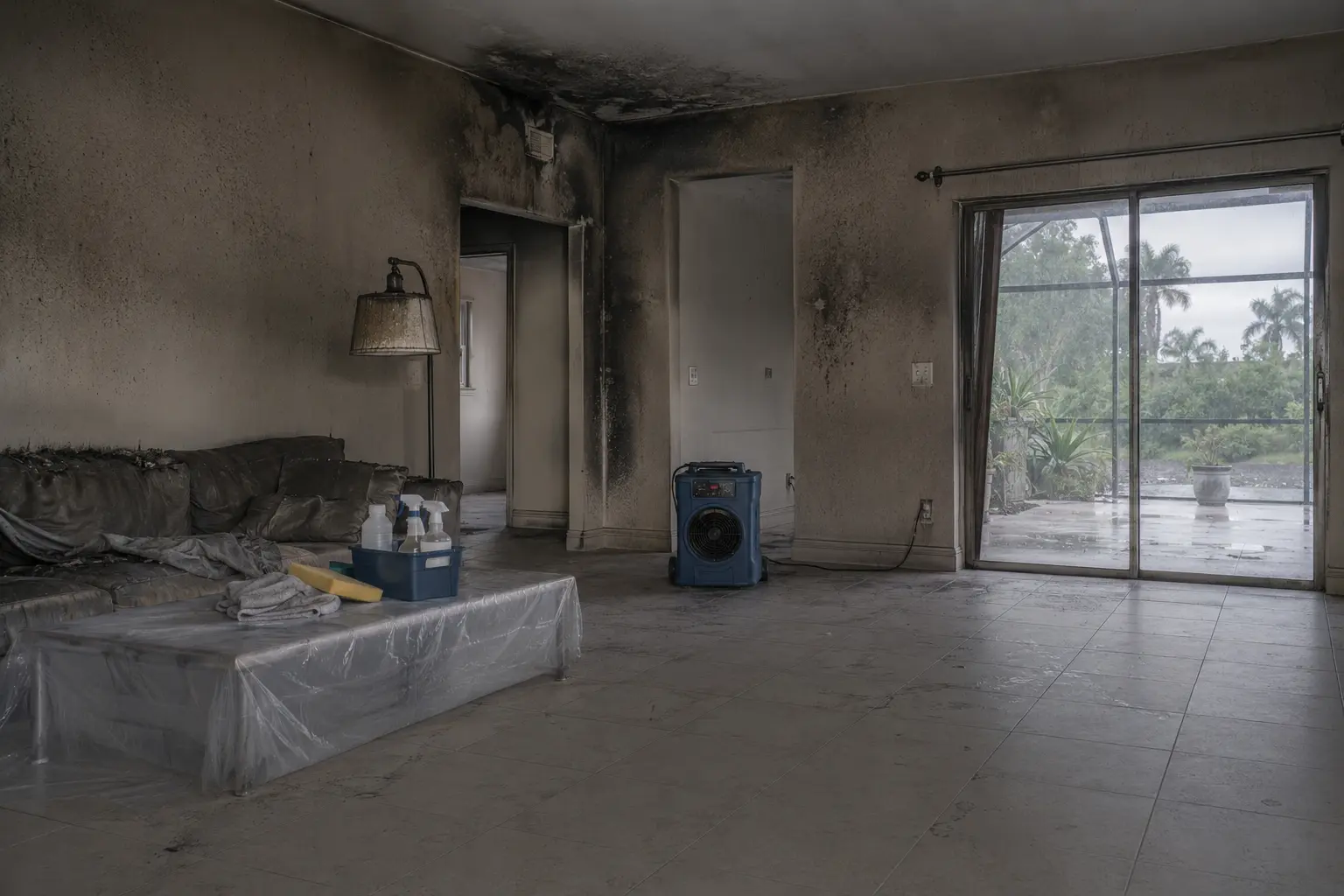
Smoke Damage Restoration
Smoke damage restoration in Marion, Sumter & Lake Counties, FL. Paul Davis provides whole-structure smoke assessment, smoke type-specific cleaning, HVAC decontamination, and odor clearance.
Smoke Damage in our primary service areas
Select a hub city to see local risk factors, the restoration process, and response times. Additional communities coming soon.
Whole-Structure Smoke Damage Restoration — Smoke Type Drives the Protocol
Smoke damage from a residential or commercial fire extends far beyond the room where the fire started — smoke travels through HVAC returns, wall cavities, open floor plans, and attic spaces to deposit residue and odor throughout the entire structure. Smoke damage restoration in Marion, Sumter, and Lake County homes requires a whole-structure assessment that identifies all contaminated areas, followed by smoke type-specific cleaning protocols for every affected surface. Paul Davis smoke damage restoration provides the complete scope: smoke type assessment, whole-structure evaluation, HEPA air scrubbing, thermal fogging, surface-specific cleaning by material type, HVAC decontamination, and post-treatment clearance confirmation.
The type of smoke produced by the fire determines the cleaning approach for every surface in the home. Dry smoke from fast-burning, high-oxygen fires leaves a powdery residue that can be dry-cleaned from most surfaces. Wet smoke from slow smoldering fires leaves a thick, sticky residue with stronger odor that requires different chemical protocols. Protein smoke from cooking fires leaves a nearly invisible film with persistent odor requiring specialized treatment. Paul Davis smoke damage restoration identifies the smoke type produced before any cleaning begins, ensuring every surface receives the correct protocol and that residue is removed rather than spread or permanently set.
Why homeowners choose Paul Davis
- Smoke type assessment before any cleaning — dry, wet, or protein
- Whole-structure evaluation beyond the fire room
- Surface-specific cleaning protocols by material and smoke type
- HVAC ductwork and air handler decontamination
- Odor clearance confirmation before completion
How Smoke Damage works, step by step
Certified restoration technicians on every job, direct insurance billing, and daily updates from first assessment through final walkthrough.
Smoke Type Assessment
Identify whether the fire produced dry smoke, wet smoke, or protein smoke — the single most important factor determining which cleaning protocol applies to every surface in the home.
Whole-Structure Smoke Mapping
Assess all areas of the structure for smoke and soot deposition — including rooms distant from the fire origin, wall cavities, attic spaces, and the HVAC system throughout the home.
HEPA Air Filtration
Industrial HEPA air scrubbers deployed throughout the structure remove airborne smoke particulates and reduce overall contamination load before surface cleaning begins.
Surface-Specific Cleaning
Every contaminated surface receives the cleaning protocol appropriate for its material type and the specific smoke type — preventing the mistakes that permanently set smoke residue into porous materials.
Thermal Fogging
Thermal fogging neutralizes smoke odor molecules that have penetrated porous materials, soft furnishings, and wall cavities — reaching depths that surface cleaning cannot address.
HVAC Decontamination & Clearance
Supply and return ducts, coils, and drain pans are cleaned to remove smoke residue before the system runs again. Post-treatment assessment confirms smoke odor clearance throughout the structure.
Frequently asked questions
Yes — smoke travels via HVAC returns, wall cavities, and air movement throughout the entire structure during a fire. Paul Davis assesses every room, not just the fire room, to identify all contaminated surfaces.
Dry smoke from fast fires leaves powdery residue. Wet smoke from slow smoldering fires leaves thick, sticky residue with stronger odor. Protein smoke from cooking fires leaves a nearly invisible film. Each requires different chemical cleaning protocols.
Yes — the HVAC system circulates smoke throughout the home during a fire, depositing residue in ducts, on coils, and in the drain pan. Running a contaminated HVAC after a fire recontaminates cleaned surfaces throughout the home.
Visible soot is only part of smoke damage — smoke molecules also penetrate porous materials and the HVAC system where they produce persistent odor. Complete smoke damage restoration addresses residue at depth, not just visible surface deposits.
Part of our
Fire & Smoke Damage Restoration →Smoke Damage Throughout Your Home? Call Paul Davis.
Paul Davis provides complete smoke damage restoration in Marion, Sumter, and Lake Counties — whole-structure assessment, smoke type-specific protocols, HVAC decontamination, and clearance confirmation. Call now.