
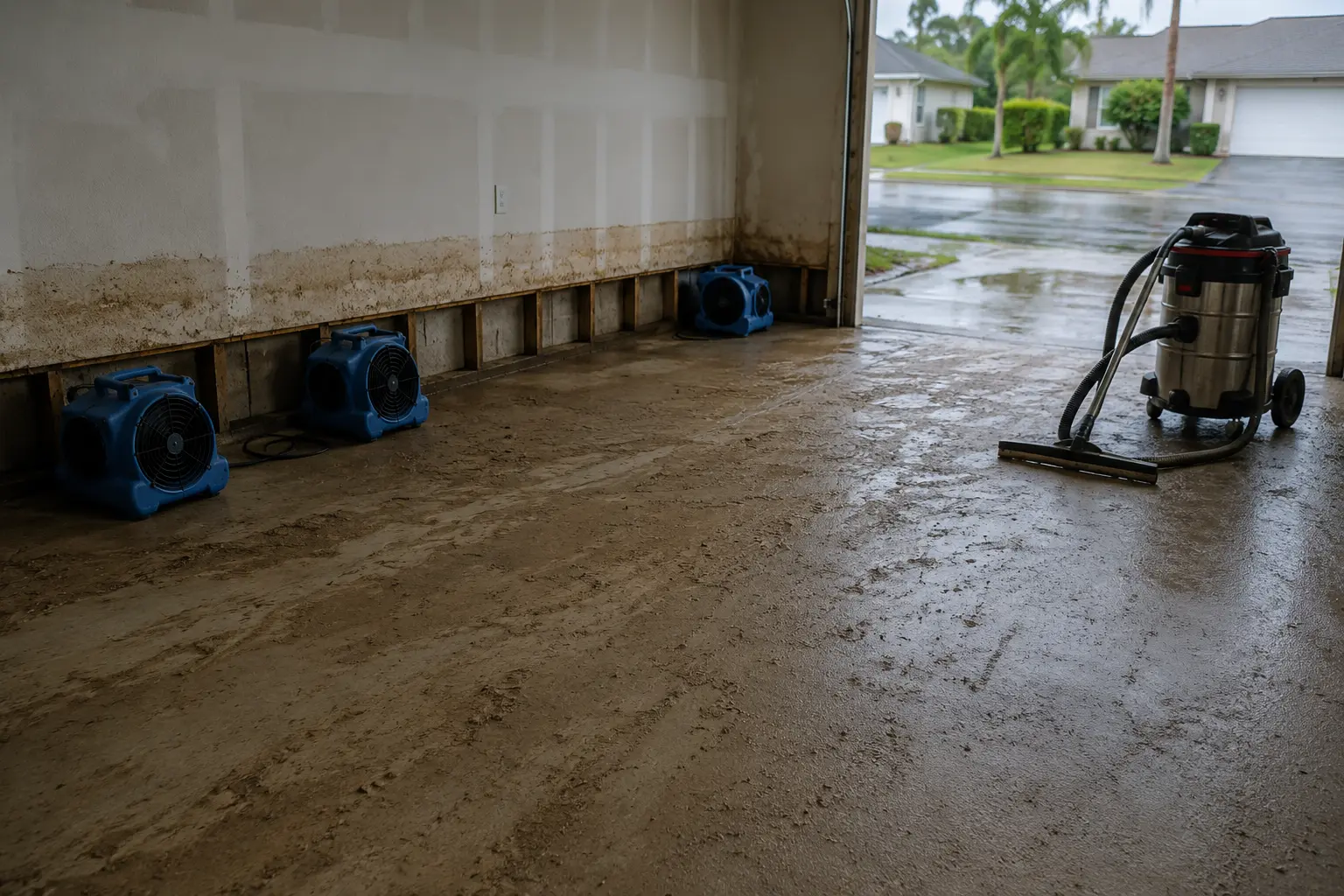
Storm Flood Damage Cleanup
Flood damage cleanup in Marion, Sumter & Lake Counties, FL. Paul Davis provides water category assessment, extraction, structural drying, sanitization, and mold prevention after flooding.
Storm Flooding in our primary service areas
Select a hub city to see local risk factors, the restoration process, and response times. Additional communities coming soon.
Flood Damage Cleanup — Water Category Determines the Protocol
Flood damage cleanup in Marion, Sumter, and Lake County requires immediate response because standing water and saturated structural materials cause escalating damage with every hour — floor finishes buckle, drywall saturates, and mold colonization begins within 24–48 hours in Florida's warm climate. Flood events are categorized by water source: Category 1 (clean water from supply lines or rain), Category 2 (gray water from appliances or overflow with contaminants), and Category 3 (black water from sewage, storm flooding, or river flooding). The water category determines the safety protocols, the personal protective equipment, and which affected materials can be dried in place versus which must be removed regardless of visible damage. Paul Davis flood damage cleanup begins with water category assessment, applies the correct extraction and drying protocols, and documents all damage for insurance.
Flood damage cleanup in Florida — particularly after tropical storms, hurricane events, and severe thunderstorms — often involves Category 2 or Category 3 water that requires additional sanitization protocols beyond standard drying. Category 3 flooding from storm surge, river overflow, or area flooding carries biological and chemical contaminants that penetrate porous materials and require antimicrobial treatment after extraction. Paul Davis flood damage cleanup addresses the complete scope: water extraction, contents documentation and pack-out, structural drying, sanitization for Category 2–3 events, mold prevention measures, and full documentation for insurance claims.
Why homeowners choose Paul Davis
- Water category (1/2/3) assessed before any work begins — determines safety and protocols
- Immediate extraction minimizes structural saturation
- Contents documentation and pack-out for insurance recovery
- Category 2–3 sanitization protocols where required
- Mold prevention is time-critical in Florida — drying begins immediately
How Storm Flooding works, step by step
Certified restoration technicians on every job, direct insurance billing, and daily updates from first assessment through final walkthrough.
Water Category Assessment
Determine whether floodwater is Category 1 (clean), Category 2 (gray), or Category 3 (black) — the category governs safety protocols, PPE, and which materials require removal versus drying in place.
Emergency Water Extraction
Industrial water extraction of all standing water from all affected areas — submersible pumps, truck-mounted extractors, and portable units for contained spaces.
Contents Documentation & Pack-Out
All affected contents inventoried, photographed, and documented for insurance. Salvageable contents packed and moved to protected storage; non-salvageable contents documented for insurance replacement.
Structural Drying Setup
Industrial air movers and dehumidifiers deployed in all affected areas. Daily moisture readings track structural drying progress — equipment adjusted by readings, not by a fixed schedule.
Sanitization
For Category 2–3 flood events: antimicrobial treatment of all affected structural surfaces after extraction — addressing biological and chemical contaminants carried by the floodwater.
Drying Confirmation & Documentation
Structural moisture readings confirm drying completion throughout all affected assemblies. Complete documentation of all flood damage and drying records provided for insurance claim.
Frequently asked questions
Category 1 is clean water (supply line, rain intrusion) and can be dried in place with standard protocols. Category 2 contains contaminants (gray water from appliances or overflow). Category 3 is sewage or storm-contaminated water requiring full sanitization — affected porous materials often must be removed rather than dried.
Mold colonization begins within 24–48 hours in warm, wet conditions — typical of Florida's climate year-round. This is why immediate extraction and drying setup is the priority from the first hour of response.
Yes — all affected contents are inventoried, photographed, and documented before any are moved. This documentation supports full contents replacement cost recovery in the insurance claim.
Yes — Paul Davis provides the complete flood restoration from emergency extraction through drying confirmation and full reconstruction of all removed materials. One contractor manages the process from start to finish.
Part of our
Storm Damage Restoration →Flood Damage? Call Paul Davis.
Paul Davis provides complete flood damage cleanup in Marion, Sumter, and Lake Counties — water category assessment, extraction, structural drying, sanitization, and full documentation. Call now.