
Specialty Restoration
Contents Cleaning & Restoration — Marion, Sumter & Lake Counties
When disaster damages your property, it damages what is inside too. Our contents team cleans, deodorizes, and restores furniture, electronics, documents, textiles, and irreplaceable personal belongings — with professional pack-out, detailed inventory, and secure off-site storage when needed.
Specialty Restoration
Belongings restored, not just replaced
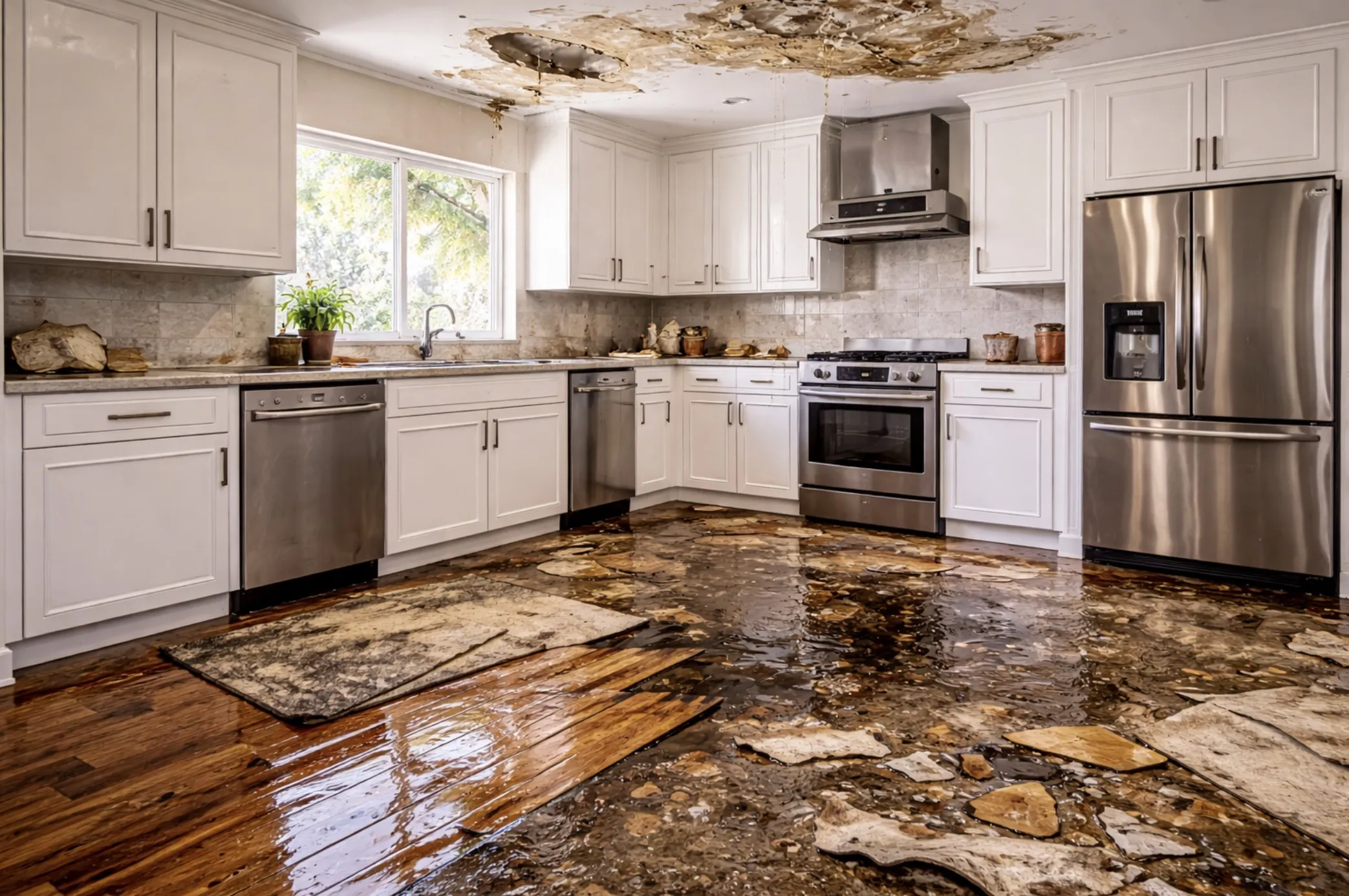
Structural restoration brings your building back. Contents restoration brings your life back. After water damage, fire and smoke damage, or storm damage, the belongings inside — furniture, electronics, clothing, photographs, documents, and heirlooms — are often salvageable with the right techniques applied quickly. The difference between restoration and replacement is almost always time: the sooner contents are assessed, stabilised, and properly treated, the more can be saved. We deploy our contents team alongside our structural crews so nothing waits.
Our contents division handles the full process across Marion, Sumter and Lake Counties: itemised inventory and photo documentation before any item leaves your property, careful professional pack-out, specialised cleaning and deodorization using ultrasonic, dry-ice, and ozone methods appropriate to each material type, and secure climate-controlled storage until your property is ready. We document everything at insurance-grade standard so covered items are properly accounted for in your claim — the same rigour we apply to structural documentation. When mold remediation or reconstruction extends the timeline, your contents remain safely stored and monitored throughout.
Why homeowners choose Paul Davis
- Itemized inventory and photo documentation completed before any item leaves your property — full insurance-grade records
- Professional pack-out with climate-controlled, secure off-site storage for the duration of your restoration
- Specialised cleaning for electronics, textiles, documents, photographs, and artwork — not just general cleaning
- Ultrasonic, dry-ice, and ozone cleaning methods used based on material type and damage — same techniques used in museum and archive restoration
- Every item documented, cleaned, stored, and returned — one team managing the full contents scope alongside your structural restoration
Itemized photo inventory of all contents before pack-out — complete documentation for your insurance claim
Professional pack-out with climate-controlled, secure off-site storage
Specialised cleaning for electronics, textiles, documents, photographs, and artwork
Soot, smoke, and water stain removal using ultrasonic and dry-ice cleaning methods
Thermal fogging and ozone deodorization for smoke and mold odor elimination from contents
Certified documentation package accepted by all major Florida insurance carriers
Our Process
What to expect, step by step
Certified restoration technicians on every job, direct insurance billing, and daily updates from first assessment through final walkthrough.
1
Inventory & Assessment
We photograph and catalogue every item before anything is moved. Each piece is assessed for restorability versus replacement, and all findings are documented for your insurance claim.
2
Professional Pack-Out
Contents are carefully packed and transported to our climate-controlled facility. Fragile, valuable, and irreplaceable items receive specialist handling — electronics, artwork, textiles, and documents are packed separately.
3
Cleaning & Restoration
Each item is cleaned using the method appropriate to its material and damage type: ultrasonic cleaning for hard goods and electronics, dry-cleaning for textiles, document drying and digitisation for papers and photographs, and ozone or hydroxyl treatment for smoke and mold odor.
4
Storage & Return
Restored items are stored securely in our climate-controlled facility until your property is ready. We coordinate return delivery and placement — everything goes back where it belongs.
Understanding Contents Cleaning & Restoration
What you need to know about contents cleaning & restoration
Most homeowners encounter contents cleaning & restoration for the first time without any preparation. Understanding what happens to your property — and why professional intervention matters — helps you make better decisions in a stressful moment.
Property damage is not a single event — it is a process. The damage visible at the moment of the incident is rarely the final state. Without professional intervention, secondary damage continues to compound: water spreads through wall cavities and subfloors, smoke residue bonds to surfaces, mold establishes colonies in hidden spaces.
The restoration timeline is not just about convenience. Insurance policies distinguish between damage caused by the original event and damage caused by delayed action or inadequate response. A professional, documented response creates a clear record that protects your claim and limits your out-of-pocket exposure.
0–24hMold can begin to colonize
72hStructural materials saturate
60 minOur dispatch target
As a certified restoration company, we follow specific industry protocols for contents cleaning & restoration — protocols developed from decades of documented outcomes. These standards exist because they produce better results: lower total restoration cost, shorter disruption to your home, and lower long-term risk of secondary problems.
What certification means for you
Certified restoration work protects your insurance claim
Insurance adjusters recognize IICRC standards. Documentation from certified technicians carries weight in the claims process in a way that DIY documentation simply cannot.
Insurance & Claims
How insurance works for this type of damage
Most homeowner policies cover sudden and accidental losses — a burst pipe, storm impact, or fire. They typically exclude gradual damage, deferred maintenance, and flood damage (which requires a separate NFIP or private flood policy).
Paul Davis works directly with most major Florida carriers: State Farm, Allstate, Citizens, Universal Property, and others. We provide Xactimate estimates, complete photo documentation, moisture logs, and drying reports — everything your adjuster needs to process the claim efficiently.
Our insurance coordination process means you don't need to be the intermediary between us and your carrier. We communicate directly, we know what adjusters need, and we advocate for a thorough scope so that the repair addresses the full extent of the damage — not just what's visible on the surface.
"Paul Davis provided the quality of work, materials, equipment and most importantly, the compassion and consideration to repair my home to like new condition and I am forever very grateful to them." — Peggy Peaslee, Verified Google Review ★★★★★
Know Your Options
DIY versus professional restoration
Consumer-grade equipment operates at a fundamentally different scale than professional restoration gear. Understanding the difference explains why DIY attempts often fail — and why they can make the final restoration more expensive.
DIY Approach
-
Shop vac & box fans
Move surface water but cannot dry wall cavities or subfloors
-
Household dehumidifier
Removes 30–50 pints/day — inadequate for structural drying
-
No moisture mapping
Hidden wet areas go undetected and produce mold
-
No documentation
Insurance claims lack evidence adjusters require
-
No protocol compliance
May void insurance or create liability for secondary damage
Paul Davis Restoration
-
Industrial air movers
100–150 CFM per unit — 10× consumer fan output
-
LGR dehumidifiers
130+ pints/day — achieves structural drying goals
-
Thermal imaging & moisture meters
Maps every wet zone, verifies drying is complete
-
Xactimate documentation
Industry-standard reports your insurer accepts
-
IICRC protocol compliance
Certifies the work and protects your claim
How We Work
From your first call to final walkthrough
Every Paul Davis job follows a documented process. You know what's happening, why, and what comes next — from the moment you call to the day we close out the project.
01
Emergency Dispatch
You call. We aim to dispatch within 60 minutes, 24 hours a day. A certified technician arrives with the equipment needed to begin mitigation immediately — we do not send an estimator first.
02
Assessment & Documentation
We conduct a full assessment using thermal imaging and moisture mapping. We document everything photographically and create a detailed scope of work before any restoration begins.
03
Insurance Coordination
We contact your carrier, provide our documentation, and work directly with the adjuster on the scope and estimate. You are not the intermediary — we handle it.
04
Mitigation & Drying
Industrial equipment is deployed to stop ongoing damage. We monitor drying progress daily using moisture readings and adjust equipment placement to meet drying goals.
05
Restoration & Rebuild
Once mitigation is complete, we coordinate or perform the reconstruction phase — returning your property to pre-loss condition or better.
06
Final Walkthrough
We walk through the completed project with you, review the documentation package, and confirm everything meets your expectations before closing out the job.
Common Questions
Frequently asked questions
In most cases, yes — if treated quickly. The most common mistake after a loss is leaving contents in a damaged space while structural work is arranged. Every additional hour of soot, smoke, or moisture exposure reduces restorability. We assess every item and give you an honest inventory of what can be restored versus what needs replacement.
We photograph and inventory every item before pack-out, then transport them to our climate-controlled storage facility. Items are cleaned and stored there until your property is ready. We coordinate return delivery and placement — you do not need to manage the logistics.
Most homeowner policies include personal property coverage that covers contents damaged in a covered event such as fire, water, or storm. We provide a complete, itemised documentation package that meets insurance industry standards — your adjuster receives the same level of documentation we provide for structural claims.
Yes. Smoke odor in soft goods, upholstery, and clothing requires specialised treatment — standard cleaning does not remove it at the molecular level. We use ozone treatment and hydroxyl generation for soft goods and enclosed spaces, and thermal fogging for items with deep odor penetration. The result is permanent odor elimination, not masking.
Electronics require immediate assessment — corrosion from water or smoke residue begins within hours. We use ultrasonic cleaning and specialised drying protocols for electronics and coordinate with electronics restoration specialists for high-value equipment. Do not attempt to power on water or smoke-damaged electronics before professional assessment.
Photographs and documents are among the most urgent items to stabilise after water damage. We use professional document drying, freeze-drying for severe cases, and digital scanning to preserve content even when the physical item is beyond restoration. Photographs can often be fully restored even from items that appear completely lost.
Damaged belongings? We can often save more than you think.
Before you write off your contents, let our team assess what can be restored. Fast response means more of what matters survives.