
Black Mold Removal
Black mold removal in Marion, Sumter & Lake Counties, FL. Paul Davis provides full containment, certified restoration technicians, complete affected material removal, and post-remediation clearance testing.
Black Mold in our primary service areas
Select a hub city to see local risk factors, the restoration process, and response times. Additional communities coming soon.
Black Mold Removal — Full Containment, Complete Removal, Clearance Testing
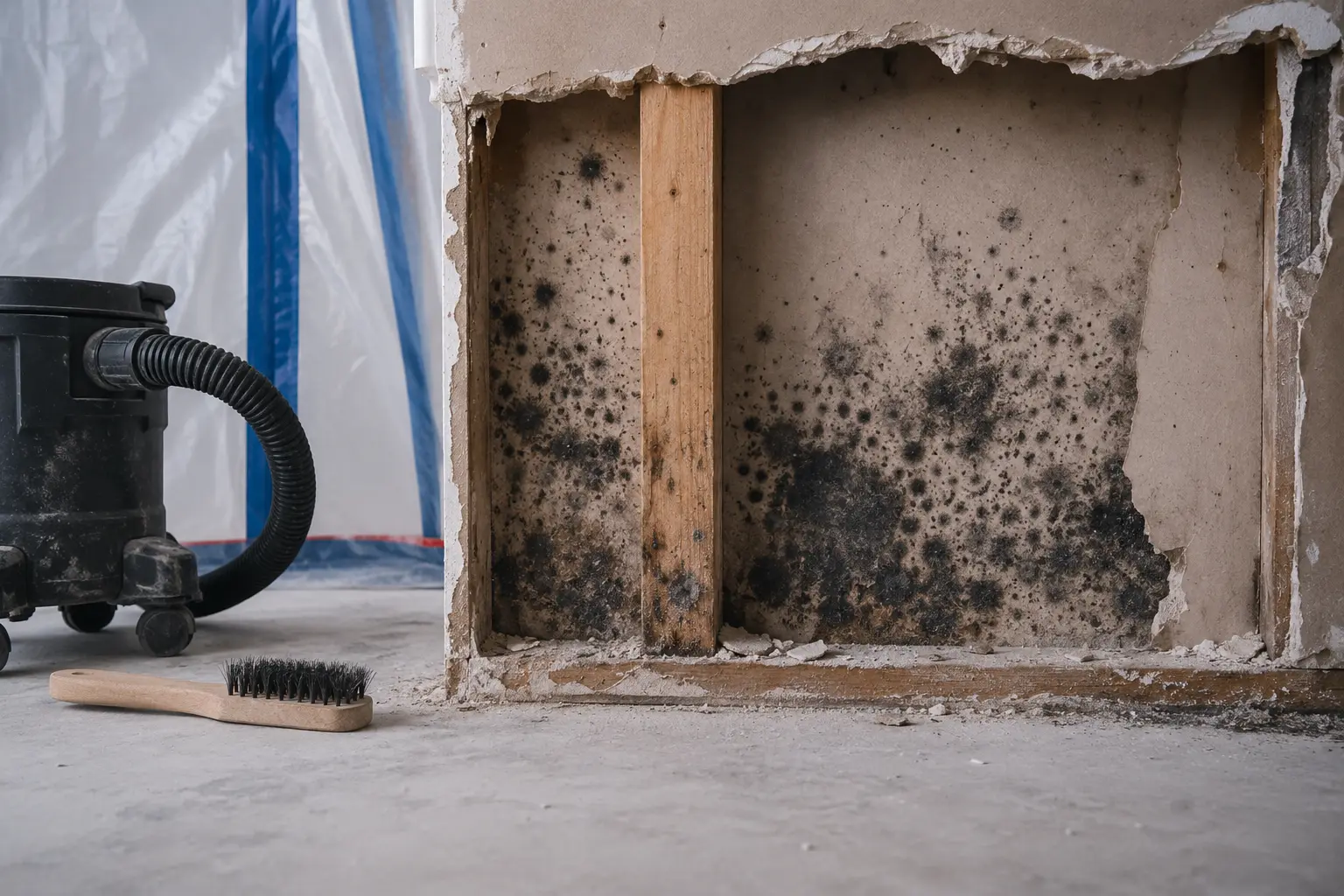
Black mold — commonly referring to Stachybotrys chartarum and other darkly pigmented mold species — requires professional remediation using full containment protocols, proper personal protective equipment, and complete removal of all mold-affected materials. Black mold grows on cellulose-containing materials in persistently wet conditions — water-damaged drywall, wood framing, ceiling tiles, and flooring — and produces spores that are released into the air during disturbance. Attempting to clean black mold without proper containment spreads spores throughout the home; incomplete removal leaves viable mold in place to regrow. Paul Davis black mold removal uses full negative-pressure containment, HEPA air filtration, certified restoration technicians, and complete removal of all affected materials followed by antimicrobial treatment and post-remediation clearance testing.
Black mold removal in Marion, Sumter, and Lake County homes requires addressing the persistent moisture condition that produced the growth — black mold does not colonize dry materials, and its presence indicates ongoing or historical water intrusion, chronic high humidity, or unresolved leak damage. Paul Davis black mold remediation includes moisture source identification as a standard part of every project: the source producing the conditions for black mold growth is identified and resolved before remediation proceeds, preventing regrowth after cleanup. Post-remediation clearance testing confirms that mold counts are within acceptable parameters before containment is removed and the property is released.
Why homeowners choose Paul Davis
- Full negative-pressure containment before any disturbance
- Certified restoration technicians on every black mold job
- Complete removal of all mold-affected materials
- HEPA air filtration throughout remediation
- Post-remediation clearance testing before containment removal
How Black Mold works, step by step
Certified restoration technicians on every job, direct insurance billing, and daily updates from first assessment through final walkthrough.
Moisture Source Identification & Assessment
Identify the moisture source driving black mold growth and map the full extent of affected materials before containment is established — including hidden areas behind walls and under floors.
Full Containment with Negative Air Pressure
Full containment barriers with negative air pressure established around the affected area before any disturbance — HEPA air scrubbers exhausting outside prevent spore migration to unaffected areas of the home.
Personal Protective Equipment Protocol
Certified restoration technicians use appropriate respiratory protection and PPE throughout all black mold removal work — protecting workers and preventing cross-contamination.
Complete Material Removal
All mold-affected drywall, insulation, flooring, and other cellulose-containing materials are removed under containment, bagged, and disposed of per applicable protocols.
HEPA Cleaning & Antimicrobial Treatment
HEPA vacuuming of all structural surfaces followed by antimicrobial application to all exposed framing, subfloor, and structural elements within the remediation area.
Post-Remediation Clearance Testing
Air sampling or surface testing confirms mold counts are within acceptable parameters before containment is removed — the property is cleared before reconstruction materials are installed.
Frequently asked questions
All mold species can cause adverse health effects in sensitive individuals; the severity depends on exposure level, individual sensitivity, and the specific species present. Black mold warrants professional remediation with full containment protocols because of the conditions required to produce it — indicating significant and persistent moisture intrusion.
No — porous materials with black mold growth (drywall, wood framing, insulation) cannot be effectively cleaned and must be removed. Attempting to clean mold on porous materials leaves viable spores embedded in the material.
Yes — post-remediation clearance testing via air sampling or surface testing is conducted before containment is removed and before reconstruction begins, confirming mold counts are within acceptable parameters throughout the treated area.
Timeline depends on the extent of affected materials and the number of areas involved. Paul Davis provides a specific timeline after the initial assessment — most contained black mold projects in residential properties are completed within 2–5 days of remediation work.
Part of our
Mold Remediation →Black Mold in Your Home? Call Paul Davis.
Paul Davis provides professional black mold removal in Marion, Sumter, and Lake Counties — full containment, certified restoration technicians, complete material removal, and clearance testing. Call now.