

Tropical Storm Damage Restoration in Clermont, FL
Clermont sits up on some of the highest ground in peninsular Florida, a run of rolling hills and ridgelines that lifts the hilltop subdivisions well above the flat country around them — and that elevation is exactly why a tropical storm finds these homes when it never lays a glove on the streets below. A system does not have to score a direct hit to do real damage up here. The hilltop neighborhoods catch wind the flatland never feels, so when outer rain bands park over South Lake County for hours, an exposed ridgetop house takes sideways rain hard against the roof and windows while sheltered streets a quarter-mile downhill barely notice. The Orlando-corridor storm track runs right over Clermont, which means even the inland tail of a coastal storm arrives here with enough wind and water to push moisture through the building envelope on the high ground.
Start your restoration
We’re on it.
A Paul Davis dispatcher will call you within minutes. Keep your phone nearby.
Need to talk now? Call us directly
Certified Tropical Storm for Clermont and Lake County Homeowners
Serving Clermont and all of Lake County, FL.
That is the part of a tropical storm people inland tend to underestimate. One of these systems rarely punches a single hole and moves on — it works on a Clermont home for hours, driving rain into a ridge vent, a lifted shingle, or a tired window seal on the windward side until the attic insulation is soaked and a stain is tracking down an interior wall. Meanwhile the runoff that the ridges shed has to go somewhere, and it ponds in the low pockets and against foundations down toward Minneola and Groveland where it has nowhere to drain. Wind and water show up as one event, not two separate claims, and treating either alone just lets the other get worse overnight.
Paul Davis Restoration handles the whole recovery, not one slice of it. We surge crews from our Belleview base while a system is still moving through, secure the property with emergency board-up and roof tarping, extract the water and dry the structure before mold takes hold, clear the downed limbs and debris, and rebuild what the storm took — all under one roof, with certified technicians and direct insurance billing. These bands do their worst slowly and after dark, which is exactly when crews are hardest to reach, so we keep ours surged and roll trucks within the hour.
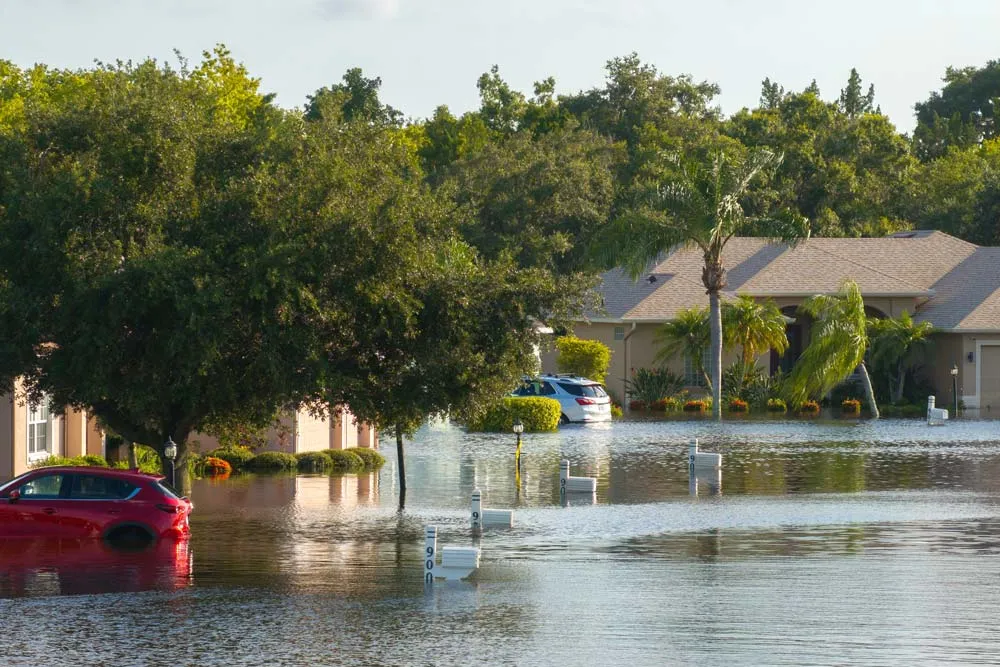
Why Clermont homeowners call Paul Davis for tropical storm damage restoration
When a tropical system sits over the ridgelines and pushes water through your home for hours, Clermont families need one team that can seal it tonight and still be the ones rebuilding it next month. Paul Davis runs the entire recovery — tarp, board-up, water, debris, and reconstruction — from a Belleview base close enough to move the moment the bands clear. From the first tarp to the last finished room, you deal with one company that owns the outcome.
- Certified restoration technicians on every job — not general laborers
- 60-minute emergency dispatch, 24/7/365
- Direct insurance billing with most major Florida carriers
- Thermal imaging and moisture mapping on every inspection
- Guaranteed workmanship
I am very pleased with the quick response to my call. They were there the same day removing the wet flooring and baseboards and bring the equipment to immediately start the drying process. They have been in contact with me to explain next steps.
What puts Clermont homes at risk
Every restoration job starts with understanding the local conditions that made it worse. These are the factors our crews see repeatedly across Clermont properties.
Exposed ridgelines catching prolonged wind
Clermont's hilltop subdivisions sit on some of the highest ground on the peninsula, and a tropical storm's outer bands hammer those exposed roofs and windward walls with hours of wind-driven rain the low streets never feel. We start at the most exposed corners of a ridgetop home first, tarping and boarding the gaps the gusts opened before the next band pours more water into the same spot. Getting a hilltop property closed up fast is the single biggest factor in how much interior loss a homeowner ends up facing.
Wind-driven rain finding the building envelope
A tropical system does not need to tear off a Clermont roof to get inside — hours of sideways rain find ridge vents, soffits, and aging window seals on the windward side and push moisture into wall cavities that look dry from the room. Because the water often enters high on an exposed ridgetop wall and travels down inside, the visible stain rarely shows its full reach. We trace it with thermal imaging and moisture mapping and dry the whole affected path, because trapped storm water turns to mold fast in South Lake County's humidity.
Runoff ponding in the low country below
Everything the Clermont ridges shed in a long tropical downpour runs downhill, and it backs up in the flat pockets and against slabs down toward Minneola, Groveland, and Mascotte where it has nowhere to go. That ground-level intrusion seeps in under doors and through slabs and is treated as contaminated water, not clean rain. We extract it, decontaminate, and dry the structure to standard before any rebuild starts.
Saturated ground loosening trees
Hours of tropical rain soak the soil that anchors the oaks and pines across Clermont's hilltop lots, and once the root ball loosens even a moderate gust can drop a limb onto a roof — often well after the strongest wind has passed. A tree through a roof is a structural breach and an open door for the next rain band at once. We remove it safely off the structure before it shifts further, then tarp the opening it left so the storm cannot finish what the wind started.
What to expect, step by step
Certified restoration technicians on every job, direct insurance billing, and daily updates from first assessment through final walkthrough.
Secure the property
Our first crew on site stops the bleeding — roof tarping over every breach and emergency board-up over broken windows and openings, so no more wind-driven rain gets in while the rest of the recovery is planned. On exposed ridgetop homes this comes first, because every hour an opening stays uncovered adds interior damage.
Assess the full scope
Once the property is secured, we walk the whole structure with thermal imaging and moisture mapping to trace where the water actually traveled inside walls and ceilings over hours, not just the damage visible from the yard. The findings are documented cleanly for your carrier from the start.
Extract and dry the water intrusion
High-capacity extractors pull standing water, then commercial air movers and dehumidifiers dry the structure to target moisture levels. Ground-level tropical flooding is handled as Category 3 water — extracted, decontaminated, and dried per IICRC standards until the structure reads dry, not just looks dry.
Remove downed trees and debris
We clear fallen limbs and trees safely off the roof and framing before they shift further, without widening the breach, then haul out the storm debris so the rebuild can start on a clean structure.
Repair and rebuild
As a licensed Florida general contractor, we rebuild the roof, framing, drywall, and interiors the storm damaged — returning your Clermont property to pre-loss condition under one accountable scope, so nothing is lost in a handoff.
Document and close the claim
From the first tarp to the final walkthrough, we photograph and log every step and bill your carrier directly, so the claim closes cleanly and the finished work carries our guarantee.
In Depth — Clermont
Tropical Storm Damage Restoration in Clermont: What You Need to Know
Wind-driven rain intrusion
Hours of sideways rain push water through ridge vents, soffits, and window seals into attics, insulation, and the wall cavities below.
This is the signature tropical-storm loss in Clermont — no torn-off roof, just moisture finding every gap on the windward side of an exposed ridgetop home while the bands sit overhead. Because the water often enters high and tracks down inside the wall, the stain rarely shows the full reach. We tarp the breach to stop the next round, then map and dry the saturated structure before it reaches the mold stage in South Lake County's humidity.
Tree and limb impact from saturated ground
A long tropical downpour loosens the soil around mature trees until the root ball gives and a limb comes down on the roof.
The oaks and pines on Clermont's hilltop lots come down across roofs and driveways through Clermont and into Minneola, often hours after the strongest gusts have passed and the saturated ground has simply let go. We remove the tree safely off the structure before it shifts, tarp the opening, and repair the framing and roofline it crushed as part of the same continuous job.
Ground-level flooding in the low country
Runoff shed off the ridges overwhelms flat lots and backs up against foundations, pushing contaminated water in through doors and slabs.
What the Clermont hills shed in a stalled tropical downpour runs downhill and pools in the low pockets toward Groveland and Mascotte long after the bands move on, seeping in at ground level with nowhere to drain. That intrusion is treated as Category 3 water — extracted, decontaminated, and dried under IICRC standards before any rebuild begins.
Mold and Your Health
Tropical storm water is nothing like the clean water from a burst pipe. When rain drives in through a roof gap over hours, or floods a home at ground level down in the low country, it picks up contaminants along the way and is treated as Category 3 — a biohazard that needs proper extraction and decontamination, not a wet-vac and a fan. Left in the wall cavities, it turns into mold within a day or two in Clermont's humidity, often long before any visible sign appears, which is why we tarp every opening immediately to stop further intrusion and dry the structure to standard before we rebuild. Getting the moisture out fast protects your family's health as much as it saves the home.
Certification & Insurance
Paul Davis crews working Clermont hold IICRC certifications in water restoration and structural drying — the standard Florida insurance carriers recognize when they review a storm claim. We are also a licensed Florida general contractor, so we rebuild what the tropical storm took rather than handing you off after the drying is done, and we are EPA Lead-Safe certified for work on older structures. One company, one set of standards, from board-up to finished room.
What to tell us when you call
Four things that speed up your claim
Type of damage — general location in the home — whether the source is still active — whether the building is safe to enter. We handle everything else.
Commercial Property Restoration
A tropical storm soaks Clermont's businesses as readily as its homes — the retail along the US-27 corridor, the offices and medical suites near downtown, and the warehouses out toward Groveland all take the same ridgetop wind and wind-driven rain that finds a roof seam and pools across the floor. Paul Davis secures commercial buildings fast with large-scale tarping and board-up, then runs extraction, structural drying, and full reconstruction on a timeline built around getting you back open, coordinating directly with property managers and commercial adjusters so the recovery does not stall.
When one of these systems sidelines your operation anywhere in Lake County, Paul Davis is the single team that secures, dries, and rebuilds it.
Why elevation makes a tropical storm worse in Clermont
Most of Lake County is flat, low country. Clermont is the exception, and that geography flips the usual inland-storm script. People assume a tropical storm that misses a direct hit is mostly a nuisance up here — but wind accelerates as it climbs and crosses open high ground, so the same ridgetop homes that enjoy the long views in fair weather are the ones taking hours of wind-driven rain against the roof and windows when the bands roll over the Orlando corridor. A system that merely rattles the flatland can drive water deep into a hilltop home's envelope, while the runoff it sheds ponds in the low neighborhoods below. We factor that split right into how we triage a Clermont street after a storm, prioritizing the most wind-exposed structures for board-up and tarping first. If you want the broader picture of how we cover the area, our Clermont service area page lays out the neighborhoods and response we handle, from the ridge subdivisions down toward Minneola and Groveland.
One crew from secured to rebuilt
After a tropical storm, the worst position a Clermont homeowner can be in is juggling a tarping company, a separate water-mitigation outfit, a tree service, and finally a contractor for the rebuild — each one starting over, each pointing at the other, while the clock runs on the insurance claim. Paul Davis is a licensed Florida general contractor, which means the same company that boards up your home while the bands are still passing is the one that dries it, clears the debris, and rebuilds the roof, ceilings, and walls. Nothing gets lost in a handoff, and the damage documentation stays consistent from the first photo to the final invoice. When a long downpour drives water deep into floors and wall cavities, we tie the recovery into our water damage restoration in Clermont protocols so the drying meets the standard your adjuster needs to approve the rebuild. Pulling the whole job under one roof is what keeps a storm recovery from stalling out halfway through.
Disaster doesn’t wait.
Neither do we.
These systems do their worst slowly and after dark, and that is exactly when we move. Our crews surge from the Belleview base as a tropical storm pushes over South Lake County, running roof-tarp and board-up trucks to Clermont around the clock so soaked roofs and shattered windows are sealed before the next band arrives. The faster a ridgetop opening is covered, the less a homeowner loses to the water that follows — call any hour during or after it passes and we dispatch within 60 minutes, 24/7/365.
Florida Emergency Hotline — 24 hours a day
Request a Free Estimate →Local department contacts
After major damage in Clermont, you may need to reach a local department — the building office for permits and structural inspections, the health department for mold or contamination questions, or fire-rescue for a fire-damage assessment. Here are the offices serving Clermont. Paul Davis is always one call away and can help you navigate the process.
Building Department
City of Clermont Building Services
685 W Montrose St, Clermont, FL 34711
(352) 241-7315Health Department
Florida Dept of Health — Lake County
2113 Griffin Rd, Leesburg, FL 34748
(352) 589-6424Contact information is accurate to the best of our knowledge at time of publication. Paul Davis Restoration is not responsible for changes to agency contact information, hours, or services. For the most current information please contact the agency directly.
Frequently asked questions
It can, and the elevation is why. Clermont's hills and ridgelines are some of the highest ground in peninsular Florida, and wind accelerates as it crosses that open high ground. When a tropical system runs the Orlando corridor, its outer bands drive rain hard against exposed hilltop roofs and windows for hours, so a storm that never makes a direct hit still pushes water deep into a ridgetop home while sheltered streets nearby barely notice.
That is the most common tropical-storm loss in Clermont. A system does not need to remove your roof to get inside — hours of wind-driven rain find ridge vents, soffits, and aging window seals on the windward side and push moisture into the attic and walls. Because it often enters high and travels down inside the wall, we map the hidden dampness with thermal imaging and dry it out before it turns to mold in South Lake County's humidity.
Yes. A long tropical downpour soaks the ground around Clermont's oaks and pines until the roots loosen, so trees often fall hours after the strongest gusts. We remove the tree safely off the structure first, before it shifts and causes more harm, then tarp the opening it left. Because we are a licensed Florida general contractor, the same team repairs the crushed framing and roofline.
We dispatch within 60 minutes, 24/7/365, and our Belleview base keeps us close to Clermont and the surrounding South Lake County communities. While a system is moving through we surge crews and run tarp and board-up trucks around the clock, because the damage usually builds overnight when the roads are still slick and littered with branches.
Both, and that is the point of a full tropical storm service. We secure the property, extract and dry the water intrusion, clear the downed trees and debris, and then rebuild the roof, walls, and interiors — one crew managing the entire recovery from the first tarp to the final walkthrough. The same standards run through our wider <a href="/services/storm-damage">storm damage restoration</a> work.
Tropical storm damage in Clermont?
When a system sits over the ridgelines for hours and pushes water through the roof and windows, you need one team to seal it tonight and rebuild it after. Paul Davis runs the whole recovery from a Belleview base, close to Clermont and ready the moment the bands clear. Call now and we will dispatch a certified crew within the hour.