Why Ocala gets hit hard
Marion County averages just over 54 inches of rain per year — nearly double the US national average — and most of it falls in the six-month wet season between May and October. Afternoon thunderstorms build daily off the Gulf, dropping an inch or more in under an hour, faster than older drainage infrastructure can handle. Add Florida's year-round humidity and you have conditions where any breach in a home's envelope becomes a water damage event within hours.
What separates Ocala from many Florida markets is its housing stock. The dominant residential construction runs from the late 1960s through the 1990s — a period when galvanized steel and polybutylene plumbing were standard, when HVAC systems were sized and installed to different standards, and when building codes did not require the moisture management details that post-2004 construction demands. Homes in Silver Springs Shores, Marion Oaks, and the older Ocala suburbs are particularly exposed.
Aging plumbing — the leading cause
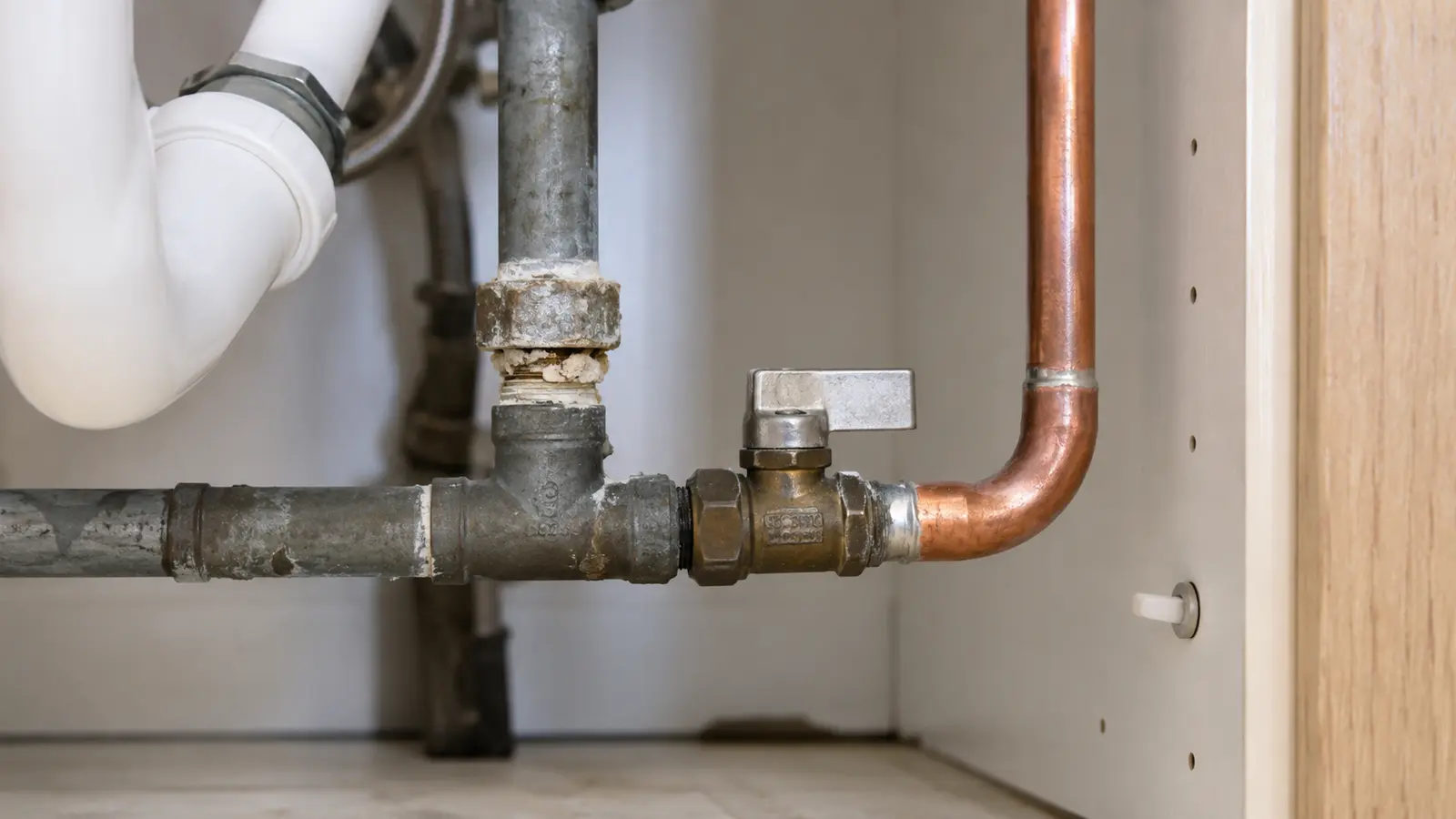
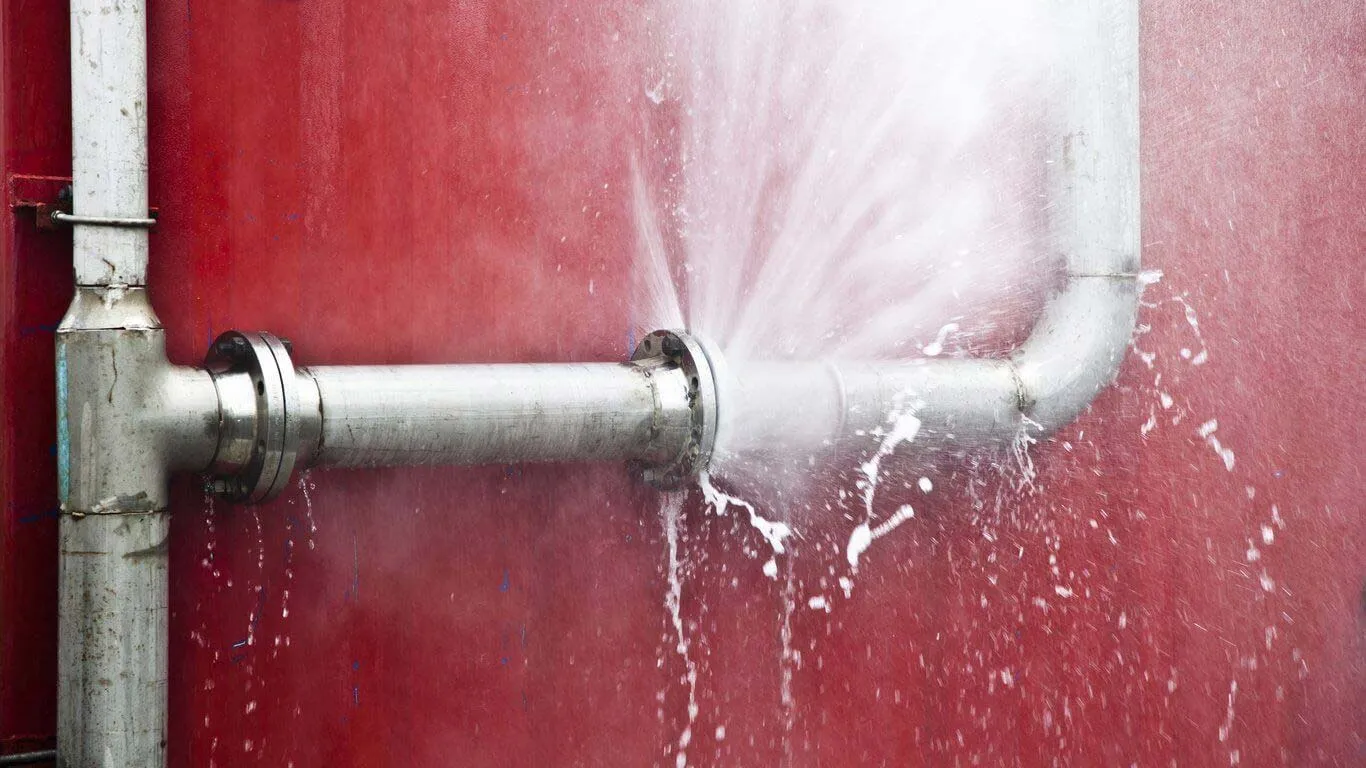
Burst pipe repairs are the single most common emergency call we respond to in Ocala. Galvanized steel pipe, which was standard in homes built before 1980, corrodes from the inside out. The exterior of the pipe looks intact long after the interior has reduced to a fraction of its original wall thickness. When it fails — usually at a joint, a bend, or under pressure spike from a cold snap — the break is almost always behind a wall, inside a cabinet, or beneath a slab.
Polybutylene pipe, used widely from the 1970s through the mid-1990s, has a different failure mode. It reacts with chlorine and other oxidants in municipal water supplies, developing micro-fractures over time that eventually propagate into a full failure. Homes in The Villages area, Ocala Estates, and On Top of the World communities that have not been repiped are living with this risk. The failure is often gradual — a slow leak behind drywall — before it becomes catastrophic. By the time visible water damage appears, there is frequently mold already establishing behind the wall surface.
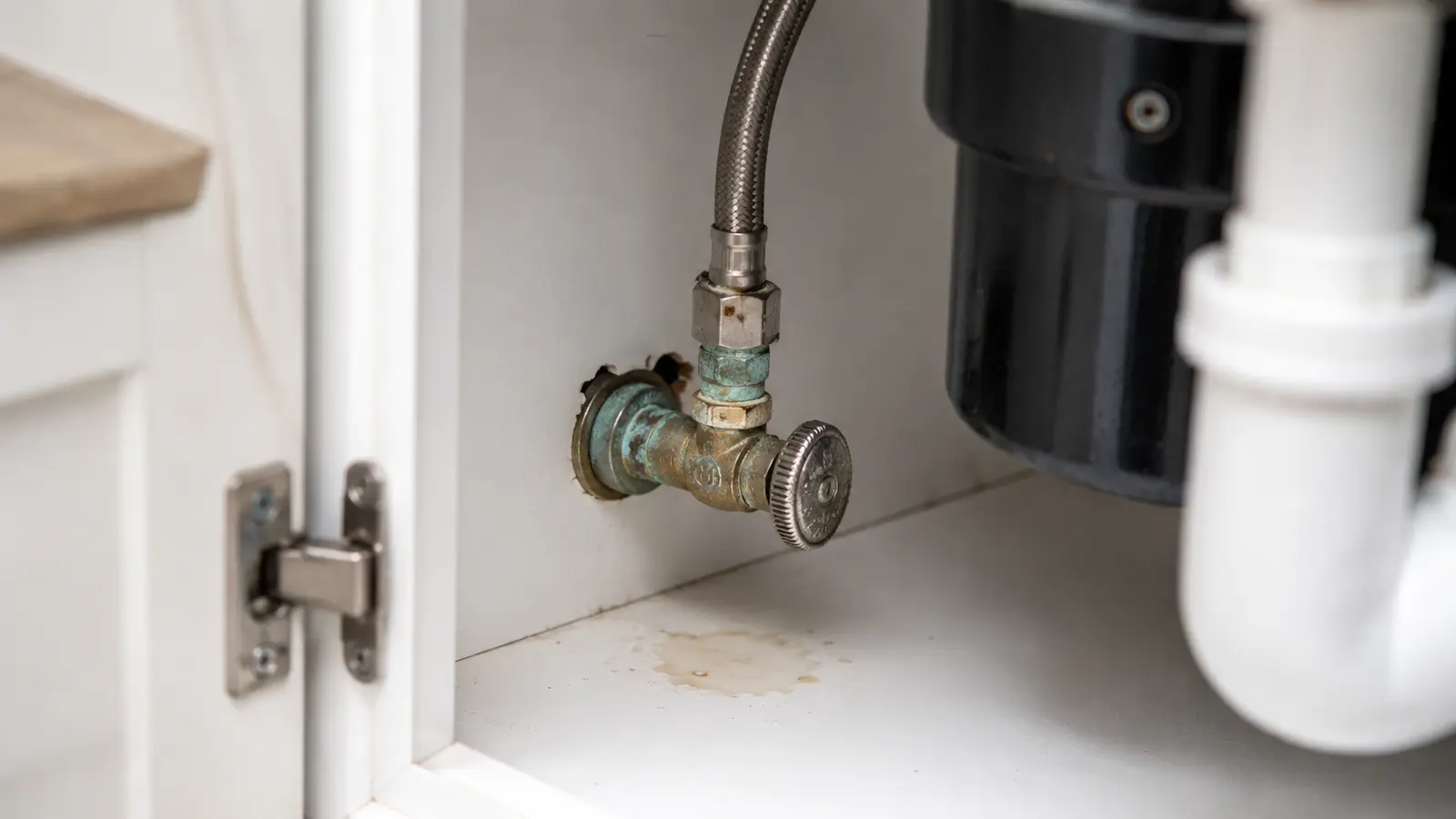
Appliance leak damage is the second most common cause in Ocala homes. Dishwashers, washing machines, refrigerator ice lines, and water heaters account for a significant share of the water damage restoration calls we handle. The failure point is almost always the supply hose — rubber hoses degrade in Florida's heat, and braided stainless lines have crimp failure modes that are not visible until they let go. A washing machine supply hose that bursts while you are away for the weekend can deliver hundreds of gallons before anyone notices.
Karst limestone and slab foundations
Marion County sits on the Floridan Aquifer — a karst limestone formation that is one of the most productive aquifers in the world. Karst geology means the limestone beneath Ocala homes is riddled with fractures, channels, and voids that water moves through in ways that do not follow normal drainage patterns. Groundwater sits close to the surface, and during the wet season the water table rises to within feet of the bottom of most slabs.
Slab leak repair is a significant part of our Ocala workload for this reason. The plumbing lines embedded in concrete slabs are under constant thermal expansion and contraction stress, and in a karst environment, slight movement of the ground beneath the slab puts additional stress on those lines. When a slab leak develops, water moves laterally through the concrete and into the floor assembly above — warping hardwood, soaking carpet backing, saturating the bottom of drywall — before any surface evidence appears. Thermal imaging is the only reliable way to map a slab leak's true extent.
The same karst drainage unpredictability means that stormwater pooled against a foundation during a heavy rain event does not necessarily drain away quickly. Block-wall construction — common in Ocala homes built before the 1990s — is particularly vulnerable to groundwater intrusion when the drainage path is disrupted.
Roof leaks and HVAC failures
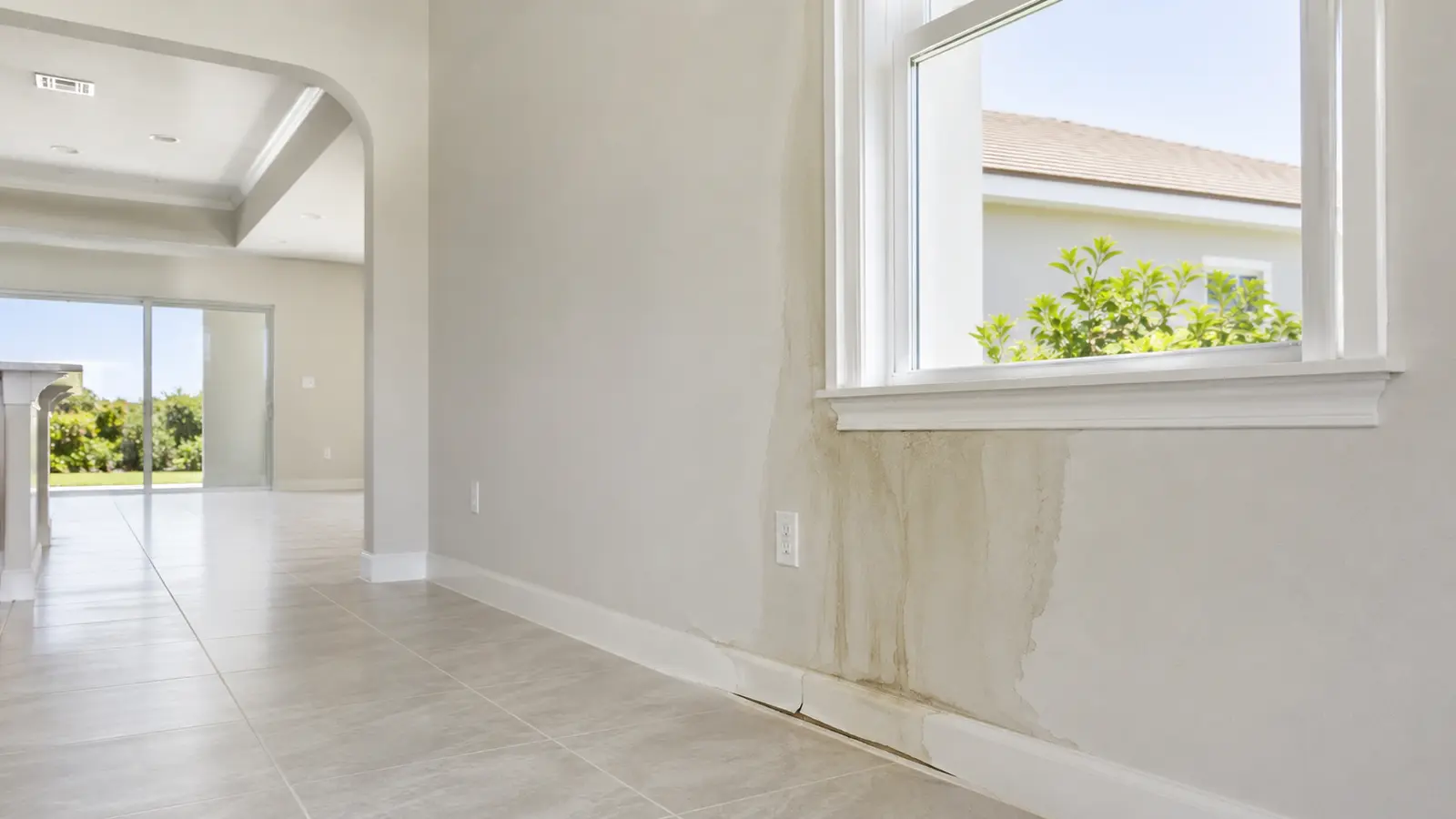
Roof leak and ceiling water damage accounts for a large share of our non-emergency restoration work in Ocala. Florida's UV exposure degrades shingles faster than in most of the country — a 20-year shingle in a northern climate may have a 12-year effective life in central Florida. The failure is almost never obvious until water has already been entering the attic space for months, soaking insulation, saturating roof decking, and beginning to establish mold in the attic.
AC and HVAC leak water damage is a year-round issue in Ocala because air conditioning runs continuously for most of the year. A clogged condensate drain line is the most common cause — the pan overflows, water runs down the air handler, and soaks into the ceiling below. In a two-story home this typically causes ceiling damage on the first floor before anyone identifies the source. In older Ocala homes where air handlers are in attic spaces, the leak path can run through insulation and framing for weeks before it becomes visible.
When it happens — what to do first
Water damage restoration in Ocala requires speed above all else. In Marion County's humidity, wet building materials can begin developing mold within 24 to 48 hours. The first call should be to turn off the water source if it is a plumbing failure, or to get emergency tarping or board-up if it is a roof or storm event. The second call should be to a restoration company, not to your insurance company — get mitigation started first, then notify your insurer.
Documentation before any cleanup is non-negotiable. Photograph every affected area, every piece of damaged furniture and flooring, and the source of the water intrusion before anything is moved or dried. Insurance claims are built on this initial documentation. Once you start cleaning up without documenting, you reduce your settlement.
Paul Davis Restoration operates out of Belleview, 12 miles south of Ocala, and responds to water damage calls across Marion County around the clock. Our response time to most Ocala locations is between 16 and 29 minutes. We bring moisture mapping equipment, industrial extraction, and drying systems on every call — and we handle the insurance documentation directly so you do not have to navigate the adjuster process alone.
Frequently Asked Questions
What causes most water damage in Ocala homes?
The most common causes are aging plumbing — particularly galvanized and polybutylene pipes common in 1970s through 1990s construction — HVAC condensate line failures, and roof leak intrusion during the wet season. Ocala averages over 54 inches of annual rainfall.
How does the karst limestone under Ocala affect water damage?
Marion County sits on a karst limestone aquifer that drains unpredictably. Water pooled against a foundation can persist for days rather than hours, and can enter through block-wall foundations in ways that are not immediately obvious.
How quickly can Paul Davis reach Ocala?
Our office is in Belleview, approximately 12 miles from Ocala. Typical response time is 16 to 29 minutes for most Ocala locations.
Does older Ocala housing stock have higher water damage risk?
Yes. Homes built between 1970 and 1995 — the dominant stock in much of Ocala and surrounding communities — often have original galvanized or polybutylene plumbing that is past or approaching its service life, making pipe failures a genuine and common risk.
Paul Davis Restoration
Marion, Sumter & Lake Counties Team
Our restoration team brings decades of combined field experience to every article. We write about what we see on the job — not theory, but the realities of property damage and recovery in Marion, Sumter and Lake Counties.